Underground excavations in Dallas must contend with the region’s variable geology, from stiff residual clays and weathered shale of the Eagle Ford and Woodbine formations to alluvial deposits near the Trinity River. Successful tunneling and shaft construction depends on rigorous geotechnical analysis for soft soil tunnels that addresses face stability, groundwater control, and settlement mitigation in mixed-face conditions. Designs also follow OSHA Subpart S and local building code requirements for temporary works, ensuring that every geotechnical design of deep excavations manages earth pressures and limits deformation around adjacent infrastructure.
These services are critical for Dallas Area Rapid Transit extensions, deep stormwater detention tunnels, microtunneling for utility corridors, and cut-and-cover station boxes. Projects demand continuous validation of design assumptions through geotechnical excavation monitoring, tracking ground movements, pore pressures, and structural response to safeguard surrounding assets and maintain construction progress.
In Dallas, the difference between a successful anchor and a creeping failure often comes down to how well you characterize the shale's moisture sensitivity.
Methodology and scope
Local considerations
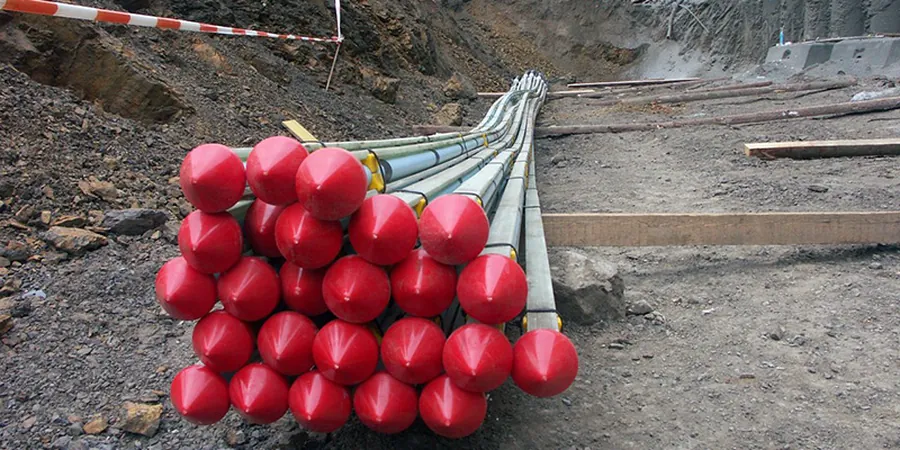
We've seen it too many times on Dallas job sites: a contractor installs anchors with a fixed-end design assuming uniform clay, only to hit a perched water zone or a fractured shale seam that slashes the grout-to-ground bond. The result is a low lift-off test and a costly redesign mid-project. In the Uptown area, where deep mixed-use excavations sometimes reach 45 feet, anchor creep in desiccated clay can relax prestress forces over just a few months if the bond length isn't extended past the active zone. We mitigate this by specifying encapsulated tendons with double-corrosion protection and running multiple performance tests on sacrificial anchors before production drilling starts. The IBC 2021 and PTI DC35.1 provide the framework, but local experience tells you when to go beyond the code minimums.
Explanatory video
Applicable standards
IBC 2021 Chapter 1810 – Anchors and Soil Nails, PTI DC35.1-20 – Recommendations for Prestressed Rock and Soil Anchors, ASCE 7-22 – Minimum Design Loads (Seismic)
Associated technical services
Active Anchor System Design
Prestressed strand or bar anchors for permanent retaining walls and bridge abutments, with full corrosion protection and lock-off load calculations.
Passive Tieback and Soil Nail Design
Unstressed grouted bars for temporary excavation support in competent clay and shale, verified through pull-out testing per ASTM D3689.
Proof and Performance Testing
On-site lift-off, creep, and extended creep tests following PTI recommendations, with real-time load-displacement monitoring.
Long-Term Monitoring and Remedial Design
Load cell instrumentation and lift-off re-checks for permanent anchors, plus remedial grouting programs when bond degradation is detected.
Typical parameters
Frequently asked questions
When do you specify an active anchor instead of a passive tieback for a Dallas excavation?
Active anchors are the better choice when lateral movement must be controlled tightly, for example next to existing structures or DART rail lines. By locking off a prestress load against the wall, we limit deflection to fractions of an inch. Passive tiebacks work in open sites with less stringent movement criteria, where the soil mass can mobilize resistance gradually as the cut deepens.
How does the Eagle Ford Shale affect anchor bond capacity in Dallas?
Eagle Ford Shale exhibits time-dependent creep and can slake when exposed to water. Our design approach uses FHWA-recommended ultimate bond values, but we always run a sacrificial anchor test to verify site-specific capacity. For permanent anchors, we specify a minimum wedge factor of 2.0 on the test load and use neat cement grout with a water-cement ratio no higher than 0.45.
What is the typical cost range for anchor design and testing in Dallas?
Fees for anchor design, including calculations, drawings, and on-site testing oversight, generally range from US$950 for a simple temporary tieback system to US$3,690 for a fully instrumented permanent anchor program with long-term monitoring. The final scope depends on the number of anchors, required corrosion protection class, and whether proof testing is carried out on a production or sacrificial basis.
What corrosion protection level is required for permanent anchors in North Texas?
We follow PTI DC35.1 recommendations, typically Class I protection for permanent anchors in Dallas. This means each tendon strand is individually greased and sheathed, and the entire assembly is encapsulated in a corrugated HDPE duct from the bond zone to the stressing head. Given the occasional presence of sulfates in the groundwater, we also use Type V sulfate-resistant cement for grouting.