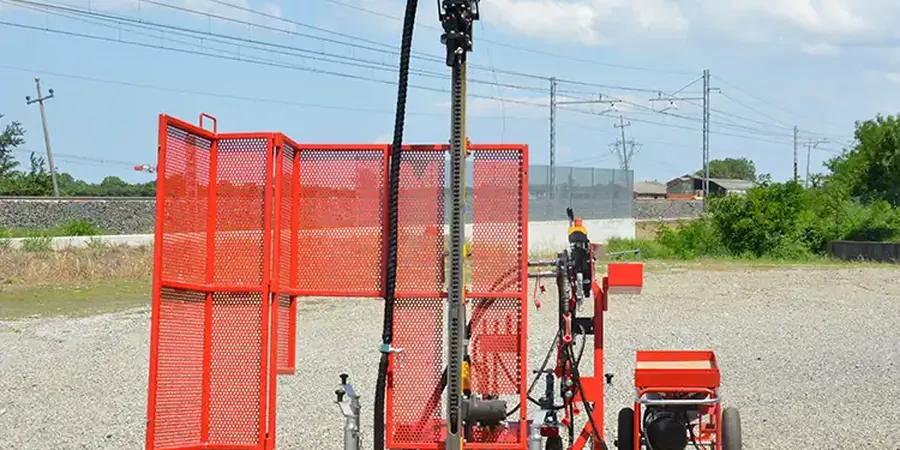
A 14-story mixed-use project in the Uptown area stalled for three weeks because the geotech report relied on old regional maps instead of site-specific drilling data. The design team needed bearing capacity numbers and liquefaction screening, and they needed them fast. That is where a properly executed SPT (Standard Penetration Test) changes the timeline. Our crew runs truck-mounted CME-75 rigs across Dallas, from the hard Austin Chalk outcrops near White Rock Lake to the deep alluvial sands of the Trinity River corridor. The SPT gives you a 2-inch split-spoon sample and an N-value at every 5-foot interval — raw data that feeds into settlement estimates, footings design, and liquefaction assessments tied to the USGS seismic hazard maps for North Texas. One borehole, logged right, can save six figures in over-excavation costs. For sites with interbedded clay layers, we often pair the SPT with in-situ permeability testing to understand drainage before foundation selection.
A clean N-value profile from Dallas shale can change your allowable bearing pressure by 1,500 psf — and your foundation cost by 20%.
Methodology and scope
Local considerations
Dallas sits in Seismic Design Category A per ASCE 7-22, which makes most engineers comfortable — but comfort leads to oversight. The real risk here is not strong shaking; it is soft clay pockets and loose silty sand lenses within the Trinity River alluvium. We have logged boreholes near the Medical District where N-values dropped from 28 to 6 over a 3-foot vertical change. That is a bearing capacity failure waiting to happen under a mat foundation. The SPT flags these weak zones before concrete goes in. For sites east of Highway 75, where the Taylor Marl weathers unpredictably, refusal at shallow depth can mislead the team into thinking they have rock — when they actually have a 2-foot boulder floating in stiff clay. Our CPT testing complements the SPT in these transitional profiles, providing continuous tip resistance data where the split-spoon alone leaves gaps. Every borehole gets logged by a geologist who understands North Texas stratigraphy, not just a driller ticking boxes.
Applicable standards
ASTM D1586-18, ASTM D2487-17e1, ASTM D4633-16, IBC 2021 Chapter 18, ASCE 7-22
Associated technical services
SPT Borehole Drilling & Sampling
Standard penetration testing with automatic hammer, split-spoon recovery, and N-value recording at 5-foot intervals. We handle access constraints from tight urban lots to undeveloped parcels.
N60 Correction & Energy Measurement
Hammer energy calibration per ASTM D4633, with N60 correction applied to all reported values. Overburden and rod-length corrections included in the final log.
Laboratory Classification Package
Grain-size analysis, Atterberg limits, and moisture content on split-spoon samples. Results integrated into the borehole log within 48 hours of drilling.
Typical parameters
Frequently asked questions
How much does an SPT borehole cost in Dallas?
Standard SPT drilling in the Dallas area typically runs between US$540 and US$870 per borehole, depending on access, depth, and traffic control requirements. Mobilization is priced separately. For a typical commercial lot requiring three boreholes to 30 feet, expect a total field cost in the US$2,000 to US$3,200 range, including the lab classification package.
How deep do you drill for SPT in Dallas?
Most commercial projects in Dallas require SPT boreholes to 30 or 40 feet, which covers the active zone of expansive clay and reaches competent shale or dense sand. For taller structures or sites near the Trinity River, we extend to 60 feet to satisfy IBC deep foundation investigation requirements and screen for liquefiable layers.
Is SPT testing required for single-family homes in Dallas?
The City of Dallas does not mandate SPT drilling for most single-family permits, but many foundation engineers require it when the lot is near a creek, on suspected fill, or in areas with known expansive soil problems. We run shallow SPTs to 15 feet for residential work, which gives the slab designer N-values and swell potential data without the cost of a full commercial investigation.