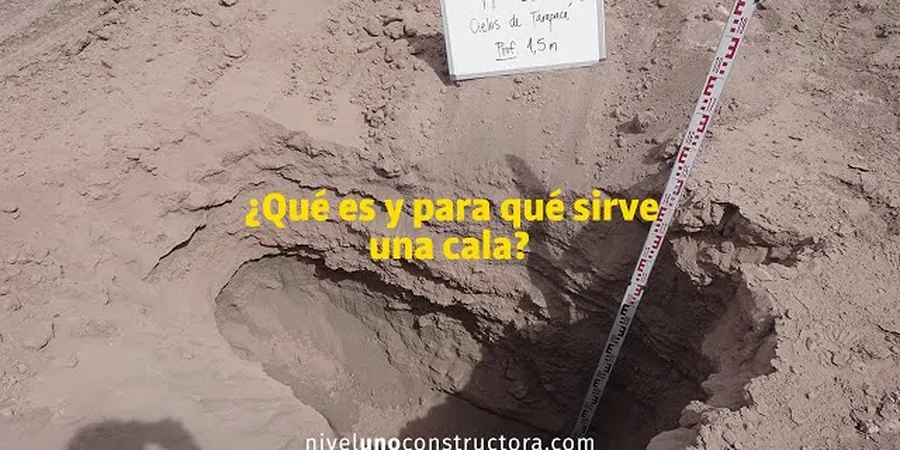
The weathered surface of the Eagle Ford Shale under Dallas rarely extends deeper than 10 to 15 feet before transitioning into competent rock. Still, that upper layer dictates foundation decisions across the metroplex. Shrink-swell behavior, fissility, and gypsum seams all vary block by block. An exploratory test pit provides a direct window into that weathered zone. No split-spoon energy corrections, no rod friction—just an open excavation where the engineering geologist can log the contact, photograph the fracture spacing, and take undisturbed block samples. When the IBC requires a bearing capacity evaluation for a shallow foundation, the test pit often delivers the most unambiguous data point. The team mobilizes a tracked excavator to depth, sets up shoring where OSHA Subpart P requires it, and logs the profile using the Unified Soil Classification System per ASTM D2488. Dallas sits in Seismic Design Category A, so site class defaults to the shear wave velocity of rock unless the upper 100 feet are profiled otherwise.
A single test pit logged at the correct elevation can prevent a foundation redesign later.
Methodology and scope
Local considerations
Dallas County has over 2.6 million residents and adds roughly 40,000 new single-family permits per year. Many of those lots sit on the Eagle Ford Group, a formation notorious for volume change. The risk is not deep bearing failure. It is differential heave or settlement across a slab-on-grade. A test pit that misses a 3-inch gypsum vein or a slickensided shear plane can mislead the geotechnical report. That leads to undersized beams, cracked drywall, and litigation. OSHA Subpart P applies to any pit deeper than 5 feet, so the crew must bench, slope, or shore. In the urban core, underground utility conflicts are dense. The field supervisor calls in a ticket to Texas811 before the excavator touches the ground. A single pit takes half a day to dig, log, sample, and backfill. But that half-day often saves weeks of redesign later.
Applicable standards
ASTM D2488-17e1, ASTM D420-18, OSHA 1926 Subpart P
Associated technical services
In-Situ Density by Sand Cone
A density test run on a bench cut into the pit wall, following ASTM D1556, to verify compaction of structural fill placed against the excavation.
Permeability Testing at Pit Depth
A falling-head test or a double-ring infiltrometer setup on the pit floor to estimate the saturated hydraulic conductivity of the weathered shale for drainage design.
Typical parameters
Frequently asked questions
How deep can a test pit go in Dallas before shoring is required?
OSHA mandates protective systems for any excavation 5 feet or deeper in Type B or C soil. Most Dallas pits in weathered shale classify as Type B and require benching, sloping, or a trench box beyond that depth. The crew follows the tabulated data in OSHA 1926 Subpart P Appendices B and C.
What is the typical cost range for an exploratory test pit in Dallas?
A standard pit to 10 feet with logging, sampling, photography, and backfill usually falls between US$520 and US$850. The final number depends on access, traffic control, and whether shoring is required.
Can a test pit distinguish between the Eagle Ford Shale and the Austin Chalk?
Yes, visually. The Eagle Ford is dark gray, thinly laminated, and fissile. The Austin Chalk is white to tan, massive, and calcareous. The contact is often sharp and can be mapped directly on the pit wall.
How is groundwater handled during excavation?
If the pit stays dry, the hole is left open for 24 hours and checked for seepage. If water enters during digging, the crew pumps it out from a sump and notes the inflow rate and stabilized level before backfilling.